
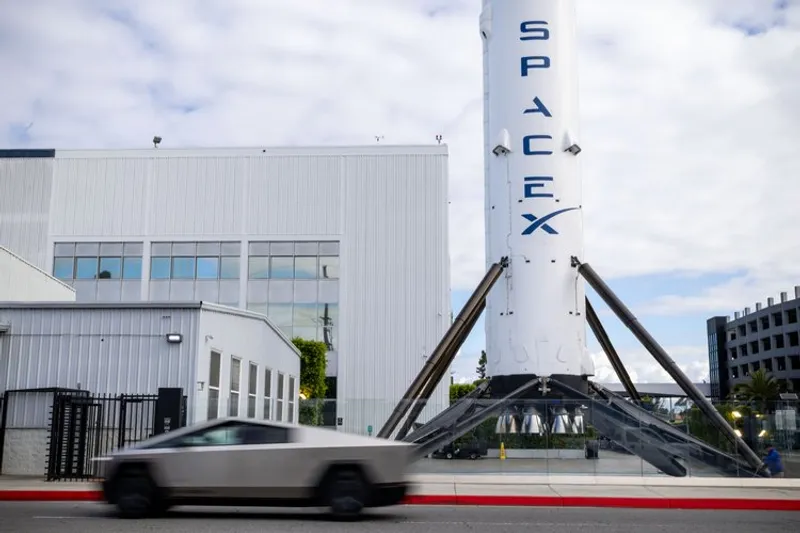
TLDR: HAWTHORNE, Calif.—CNBC reports Elon Musk has discussed folding SpaceX and Tesla together while SpaceX prepares for Nasdaq trading after a $1.25 trillion valuation.
Key Takeaways:
- SpaceX and Tesla already share personnel and engineering work, with both companies ramping AI compute and infrastructure.
- CNBC says Musk discussed a possible merger with colleagues, as shared power and compute constraints drive ongoing collaboration.
- A SpaceX Tesla tie up could reshape control, pricing, and governance for both shareholder bases, while boosting Musk and AI scale bets.

If this becomes real, it reads less like a tech mashup and more like Musk consolidating his AI supply chain. The question is who pays the price tag when two stock books start negotiating as one.
If this becomes real, it reads less like a tech mashup and more like Musk consolidating his AI supply chain. The question is who pays the price tag when two stock books start negotiating as one.
Q&A
What changes for investors the moment SpaceX starts trading, even before any Tesla merger decision?
SpaceX becomes a separate market reality with its own valuation benchmarks, making any later consolidation story easier to price and harder to justify purely as branding.
Why would Musk want a merger narrative right as SpaceX heads for public markets?
Combining growth assets can raise the perceived ceiling, but it also lets Musk frame AI scale as a unified strategy rather than two unrelated capex stories.
How could the parent company choice affect who gets more leverage in a stock swap?
The parent decision can shift voting power, economic rights, and negotiation leverage during valuation talks, potentially changing outcomes for minority holders in each company.
What makes the governance setup at SpaceX a big deal for any consolidation talk?
SpaceX being labeled a controlled company means governance protections differ for Class A holders, so approval mechanics may look smoother than typical public company mergers.
If suppliers already treat Musk companies as one customer, what incentive might regulators or courts look for next?
They will likely focus on whether the combination materially reduces competitive choices, even if the companies already coordinate procurement and engineering today.
Top in Startups

ClickHouse triples revenue as IPO rumors get louder

Bose sleep veteran SOND funds $7M and launches Dreambuds

Cognition books $1B raise as Devin wins enterprise demand

Drew Houston hands Dropbox CEO reins to Ashraf Alkarmi

No comments yet. Be the first to share your thoughts!