
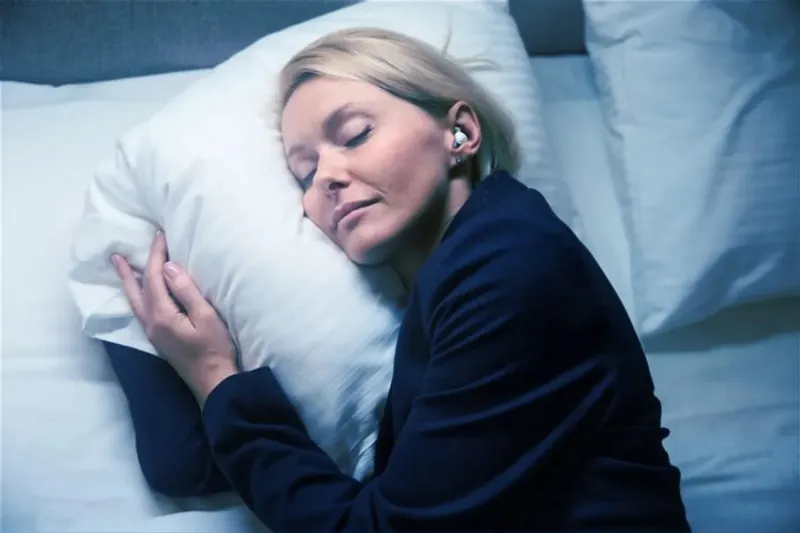
TLDR: BOSTON—SOND, a Boston sleep tech startup led by Bose sleep veteran Yadid Ayzenberg, raises $7 million and launches Dreambuds.
Key Takeaways:
- Ayzenberg left Bose’s sleep business and teamed MIT grads to push beyond noise masking with sensors and intervention.
- Dreambuds capture 12 signals, feed them to a cloud AI sleep coach, then play targeted audio programs in real time.
- By running end to end in a Wi Fi and speaker charging case, Dreambuds aims to reduce phone dependence for sleep coaching.

Sleep earbuds just leveled up from distraction to decision making. With a cloud AI coach choosing interventions from 500 plus audio programs, SOND is betting the next sleep revolution is listening and acting, not just soothing.
Sleep earbuds just leveled up from distraction to decision making. With a cloud AI coach choosing interventions from 500 plus audio programs, SOND is betting the next sleep revolution is listening and acting, not just soothing.
Q&A
Why does SOND emphasize avoiding phone control, and what breaks if the case fails?
The pitch is continuity: take out the buds and the plan resumes. If the case connectivity or speaker wake features underperform, users may revert to phone based routines, weakening the closed loop experience.
How does SOND prove its audio recommendations actually change outcomes, not just feelings?
The company can compare physiological shifts before and after specific programs, then refine the coach’s selection rules over time. Comfort studies and beta results will matter most for credibility.
What does collecting snoring and seismocardiography signals enable that simpler earbuds cannot?
Snoring and SCG add direct clues about airway behavior and cardiac related mechanical patterns. Those signals can support more precise timing for wind down versus stabilization routines.
What happens to the AI coach if cloud service latency or outages disrupt real time selection?
A practical fallback matters, such as default programs, local buffering, or delayed interventions. Without a graceful mode, the product risks feeling inconsistent when users need it most.
Why is a Bose alumni launch a big deal for this market, even if Bose exited?
It signals durable expertise and lessons learned from hardware constraints, battery life, and sensor integration. That history may help SOND move faster toward mass production than a first time team.
Top in Startups
ClickHouse triples revenue as IPO rumors get louder
Cognition books $1B raise as Devin wins enterprise demand

Drew Houston hands Dropbox CEO reins to Ashraf Alkarmi

Dropbox CEO exit pressure grows as Houston hands baton

No comments yet. Be the first to share your thoughts!