
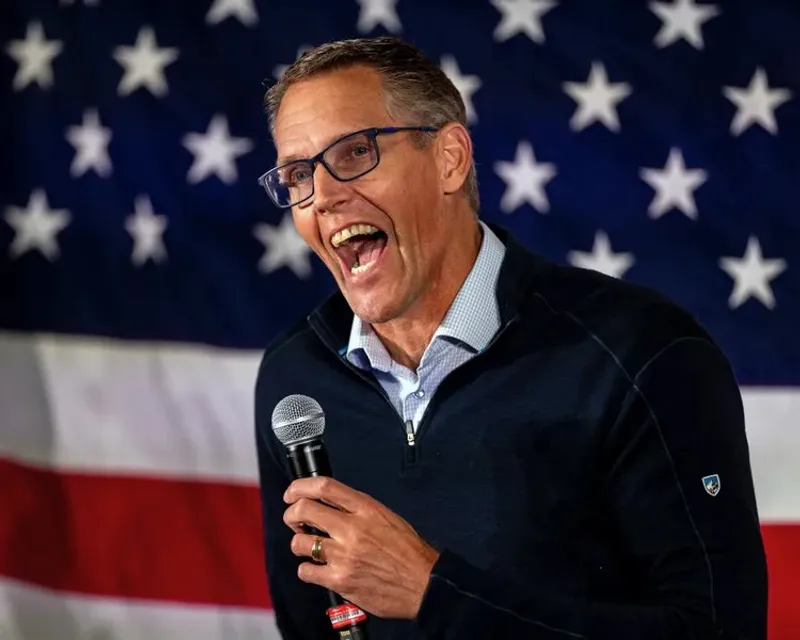
TLDR: DES MOINES—Iowa Republicans chose Zach Lahn over Rep. Randy Feenstra in the gubernatorial primary, giving President Trump his first major statewide primary loss of 2026. The upset reshapes GOP expectations for the 2026 midterms and the state’s next governor race.
Key Takeaways:
- Iowa is an early, high signal contest for Republican momentum heading into the 2026 midterms and governor races.
- Zach Lahn defeated Rep. Randy Feenstra in the Iowa Republican gubernatorial primary, marking Trump’s first major statewide primary loss of the cycle.
- The result weakens the assumption that Trump endorsements automatically win statewide primaries, forcing Republicans to rework strategy and fundraising.

Trump still writes the playbook, but Iowa just proved voters will also edit it. When a longtime congressman loses the primary, the real fight shifts from slogans to statewide candidate fit.
Trump still writes the playbook, but Iowa just proved voters will also edit it. When a longtime congressman loses the primary, the real fight shifts from slogans to statewide candidate fit.
Q&A
If Trump momentum can stall in Iowa, which states are most likely to show similar cracks next?
States with closely watched, competitive GOP primaries and strong local candidate brands tend to matter most, because endorsement advantage can fade when voters prioritize familiarity, organization, and fundraising strength.
What does Feenstra’s primary loss imply about how Republicans weigh national alignment versus state level leadership?
It suggests GOP primary voters can treat national figures as background noise when they believe the state needs a different kind of governing profile, often rewarding ground game and policy messaging tied to local priorities.
Could this upset change how future challengers position themselves against Trump backed candidates?
Expect more candidates to run on a two track message: respect for party goals while arguing that only they can deliver results for the state, often using targeted contrasts rather than direct personality attacks.
How might the Lahn nomination reshape the general election matchup in Iowa?
A fresh nominee can force Democrats to recalibrate contrast ads, while Republicans may need to consolidate donors and activists quickly to avoid turning the general election into a referendum on the primary upset itself.
What historical pattern does this resemble in midterm cycles when a national star underperforms in an early primary?
It echoes past cycles where national endorsement power met local voter concerns, producing early proof that turnout, candidate organization, and economic concerns can outweigh national political gravity.



No comments yet. Be the first to share your thoughts!