
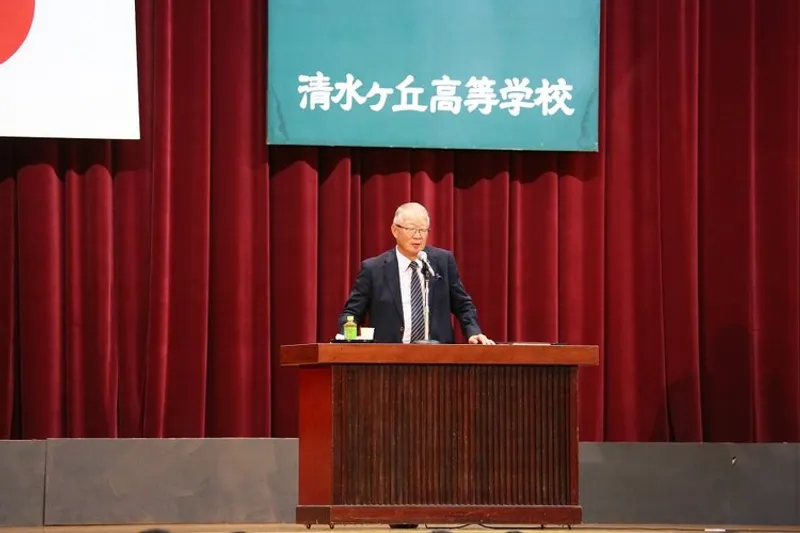
TLDR: HIROSHIMA—Media veteran Hideaki Ota told about 600 Hiroshima students hope comes from history, linking Meiji modernization, rights cases, and Japan’s aging crisis to plans for 2050.
Key Takeaways:
- Ota spoke after Shimizugaoka High School capped first year nursing students before clinical training, framing Japan’s future as a student responsibility.
- He cited Meiji era reformers, Western translation work, and a League of Nations fight over racial equality, plus the 1872 Maria Luz case in Yokohama.
- He warned Japan could lose about 920,000 people in 2024 and projects near 64 million by 2100, arguing tech and better family and work systems must accelerate revival.
- He also pointed to concrete ambitions, from quantum computing and regenerative medicine to semiconductor efforts in Hokkaido, and even energy via methane hydrate.

Ota’s message lands like a familiar Japanese proverb with a modern stopwatch: the past can steady you, but the demographic clock keeps ticking. His bet is that ambition, not nostalgia, will carry Japan into 2050.
Ota’s message lands like a familiar Japanese proverb with a modern stopwatch: the past can steady you, but the demographic clock keeps ticking. His bet is that ambition, not nostalgia, will carry Japan into 2050.
Q&A
What does Ota’s focus on the 1872 Maria Luz incident suggest about how Japan may handle current human rights disputes?
He highlights a long record of arguing sovereignty on humanitarian grounds, implying Japan wants credibility built through legal process, not only diplomacy.
Why might “hope comes from the past” be more than motivational language in a classroom setting?
By tying history to nursing clinical training and policy choices, he frames students as the future operators of systems, not just the audience of outcomes.
How does the League of Nations racial equality rejection change the way students might view Japan’s role in global norms?
It shows Japan once pushed for inclusion but faced power politics, which can steer today’s leaders toward coalition building before proposals reach the finish line.
If Japan’s population shrinks fast, what should be the first measurable proof that policy shifts are working?
The most direct signal would be sustained changes in births and labor participation, especially enabling childbearing for people who want children and expanding women’s career outcomes.
Why would Ota pair high tech promises like iPS cells and semiconductors with demographic anxiety?
Because future growth may depend on productivity gains and immigration or role expansion, not just headcount, and technology can change what a smaller workforce can deliver.





No comments yet. Be the first to share your thoughts!