
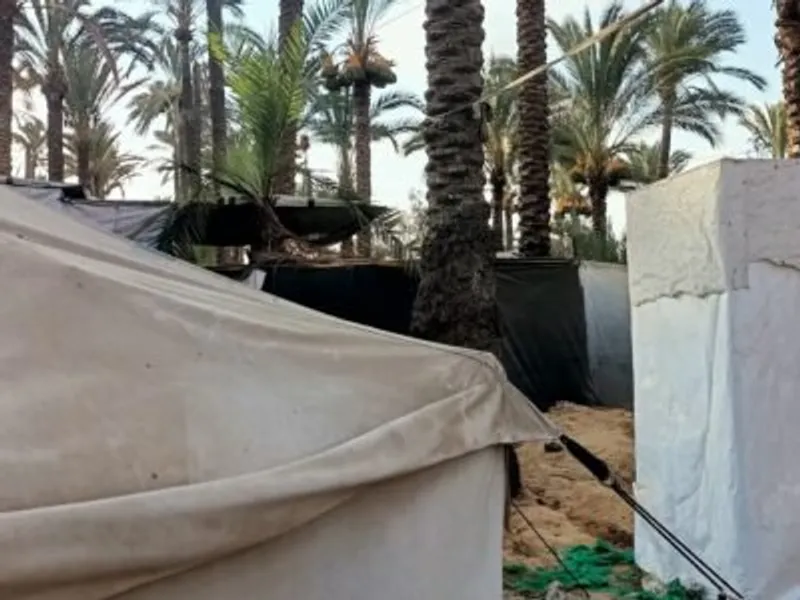
TLDR: GAZA—In Gaza displacement shelters inside schools, overcrowding strips families of privacy, turning sanitation, care, and rest into shared exposure.
Key Takeaways:
- UNRWA says about 218,600 displaced people lived in 92 of its Gaza schools in early October 2023, and numbers kept climbing.
- Daily life happens in one continuous shared space with no closed doors, including improvised bathrooms and care during vaccination campaigns.
- Health impacts deepen when crowded settings block safe movement and confidential routines, leaving children with injuries that can last a lifetime.

When a war turns schools into housing, the cruel trick is how fast private life evaporates. In Gaza shelters, even rest feels borrowed, not lived.
When a war turns schools into housing, the cruel trick is how fast private life evaporates. In Gaza shelters, even rest feels borrowed, not lived.
Q&A
What happens to vaccination and basic healthcare when shelters function as dense, constant traffic zones?
Health teams must operate through cramped routes and shared waiting areas, making outreach slower and raising the risk that households miss follow ups.
How does the loss of privacy change child development and routines, even when families try to keep normal schedules?
Children lose quiet corners for play and recovery, so stress grows and minor conflicts spread faster because there is nowhere to reset alone.
Why does overcrowding persist after fighting cools, instead of shrinking once people expect stability?
Housing damage and limited alternatives keep school sites functioning longer than planned, so temporary displacement becomes fixed infrastructure.
What are the practical safety risks when hygiene spaces like improvised bathrooms sit inside the same sleeping and cooking area?
Crowds concentrate around sanitation at peak times, increasing friction, exposure, and difficulty keeping clean separations between ill health and daily routines.
Where does privacy matter most during displacement, and what does its absence signal beyond comfort?
Privacy protects dignity, boundary setting, and confidential care, so its absence signals deeper erosion of personhood and long term coping capacity.





No comments yet. Be the first to share your thoughts!