
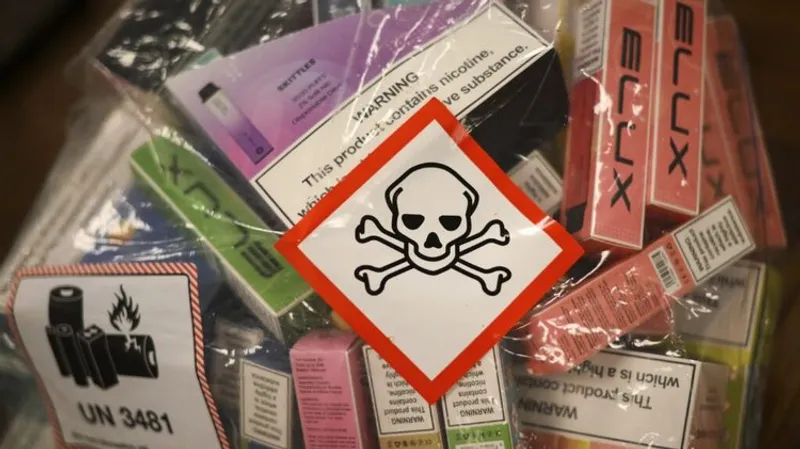
TLDR: WASHINGTON—Sen. Dick Durbin argues the Trump administration pushed the FDA to authorize flavored e-cigarettes and keep other products on shelves without required review, threatening youth nicotine addiction.
Key Takeaways:
- Durbin links his father’s lung cancer to his push against youth vaping and describes flavors as a proven addiction pathway.
- He says FDA authorized one company’s flavored vapes on May 8 and later let thousands of products stay without premarket authorization.
- He argues the moves violate the law’s public health proof standard and could increase youth vaping, cigarette smoking, and long term cancer risk.

If flavors are basically bait, this decision reads like the referee letting one player switch to a new rulebook midgame. Durbin is betting the cost lands on kids, not lawmakers.
If flavors are basically bait, this decision reads like the referee letting one player switch to a new rulebook midgame. Durbin is betting the cost lands on kids, not lawmakers.
Q&A
What legal leverage does the FDA have if Durbin and others challenge these authorizations?
Opponents can press for compliance with the premarket authorization requirement, pushing courts or oversight bodies to require the agency to follow its own statutory standard for public health protection.
How could retailers and enforcement agencies react to wider availability of flavored products?
More enforcement can shift to age checks and state compliance, but the practical effect may depend on local inspection capacity and whether flavored sales become normalized in convenience stores and vape shops.
Why does Durbin focus on flavors rather than nicotine levels alone?
He is arguing that flavors lower the barrier for initiation and make addiction more likely, so the marketing appeal can matter as much as the pharmacology.
What happens if youth vaping rises and smoking does too later?
Health systems could see delayed impacts as nicotine dependent teens age into cigarette use, compounding cancer and chronic disease burdens that campaigns may have spent decades reducing.
Could this shift how future tobacco regulation is written or enforced?
Yes. If authorizations and removals stay inconsistent, lawmakers may tighten statutory timelines, increase penalties, or create clearer rules that reduce discretion during political transitions.
Top in Opinion
White House scaffolding reveals UFC Freedom 250 build
Poll Finds Americans Blaming Weakness and Trump Loyalty
Trump collides with Senate GOP after Cornyn loss

Pope Leo XIV warns AI could hollow human dignity

No comments yet. Be the first to share your thoughts!