
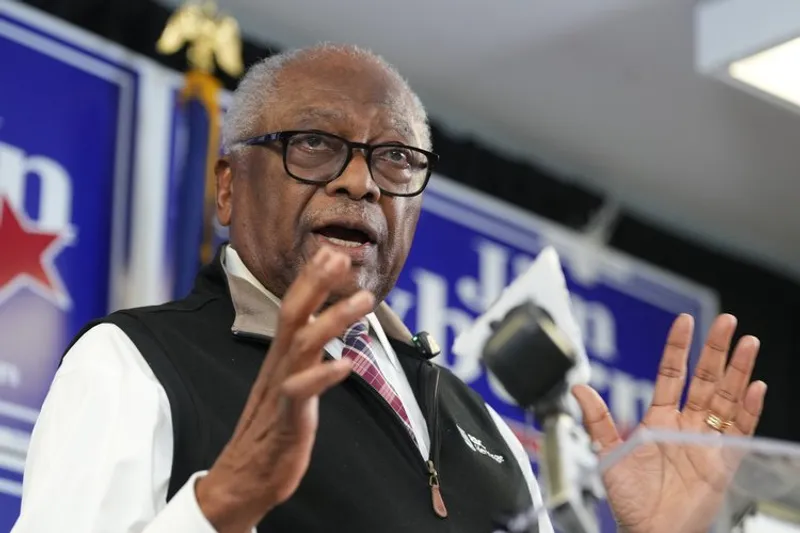
TLDR: COLUMBIA, S.C.—South Carolina Republicans scrapped a Trump backed redistricting plan that would have targeted Jim Clyburn’s majority Black House district, avoiding delays to June primaries and keeping Clyburn in place for now. The decision lands after the U.S. Supreme Court weakened Voting Rights Act protections, raising stakes for minority representation and political power.
Key Takeaways:
- Clyburn’s majority Black district has held steady for 34 years, amid post Supreme Court Voting Rights Act uncertainty and GOP redistricting pushes.
- Republican state lawmakers rejected a plan that President Trump backed and that they said could target Clyburn, citing elections already underway and constitutional principles.
- The punt preserves one safe seat but keeps the broader fight alive, with fears of multiple competitive districts and continued map leverage for both parties.
- Some Republicans worried that splitting Clyburn’s district could trigger a dummymander, while Democrats and activists framed lines as representation, not just strategy.

South Carolina Republicans chose timing over precision, letting an influential Democrat keep breathing room while the bigger national redistricting fight keeps regrouping. For Clyburn, the map pause is also a political reminder that incumbency can still outvote even a Trump styled blueprint.
South Carolina Republicans chose timing over precision, letting an influential Democrat keep breathing room while the bigger national redistricting fight keeps regrouping. For Clyburn, the map pause is also a political reminder that incumbency can still outvote even a Trump styled blueprint.
Q&A
What could force lawmakers back to the drawing table after this rejection?
If courts, deadlines, or legislative priorities shift before the next redistricting cycle, lawmakers may reintroduce map changes that survived this session only by being sidelined.
How does avoiding June primary delays change campaign strategy for both parties?
Keeping districts unchanged means candidates can lean on settled ground rules for fundraising and voter outreach instead of scrambling for new precincts and ballot math.
Why might Republicans accept Clyburn’s seat even if their goal is maximizing congressional wins?
They can pursue other seats without provoking a backlash tied to minority representation, especially in a state where GOP lawmakers described an independence from national operatives.
What is the practical effect of Supreme Court Voting Rights Act weakening on map fights like this one?
It reduces a key legal shield for majority Black districts, so lawmakers and courts increasingly weigh intent, demographics, and compliance in more contested ways.
Could demographic shifts eventually make a future version of this fight less predictable?
If Black populations and voting patterns keep changing across counties within the district, future maps may produce different competitiveness, altering incentives for both map makers and challengers.





No comments yet. Be the first to share your thoughts!