
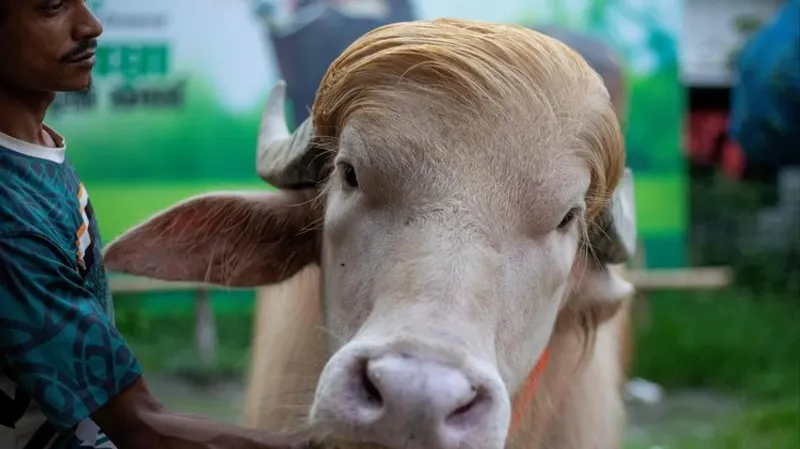
TLDR: DHAKA—Bangladesh spared a 700kg albino buffalo nicknamed Trump from Eid al-Adha sacrifice, sending it to the national zoo. People in Dhaka celebrated by shifting fate from slaughter to care.
Key Takeaways:
- Muslim-majority Bangladesh marks Eid al Adha, the feast of sacrifice, with animals traditionally slaughtered.
- Officials spared the 700kg albino buffalo known as Donald Trump for its blond, flowing hair and moved it to the national zoo.
- The surprise rescue turns a sacred practice into animal welfare win, while public curiosity keeps the animal in the spotlight.
- Eid al Adha timing matters: slaughter plans for the buffalo were pulled to redirect its future.

Eid al Adha is serious business, but social attention can rewrite even a slaughter schedule. One buffalo’s hairdo turned public love into a last minute safety net.
Eid al Adha is serious business, but social attention can rewrite even a slaughter schedule. One buffalo’s hairdo turned public love into a last minute safety net.
Q&A
What would need to change for similar celebrity animals to be regularly protected during Eid al Adha?
Authorities would likely need clear referral rules for seized or famous livestock and agreed welfare standards for temporary and long term care.
Why does a popular nickname like Trump work as leverage for protection in a tradition rooted in sacrifice?
A recognizable story cuts through routine logistics, pulling media and public pressure toward a humane outcome without erasing the holiday’s meaning for most families.
How might the national zoo handle a rare albino buffalo differently than an ordinary rescued animal?
Albino animals often need specialized light and skin care plans, tighter monitoring for stress, and veterinary oversight tailored to rare traits.
Could this case influence future decisions about transporting or trading animals for religious holidays?
It may encourage buyers and intermediaries to vet animals more carefully and to consider welfare based detours when an animal becomes unusually identifiable.
What precedent does this follow in South Asia and beyond when public sentiment stops planned animal slaughter?
Rescue campaigns have repeatedly succeeded when attention spikes, but the durable lesson is that fast institutional partnerships between communities and wildlife facilities matter.





No comments yet. Be the first to share your thoughts!