
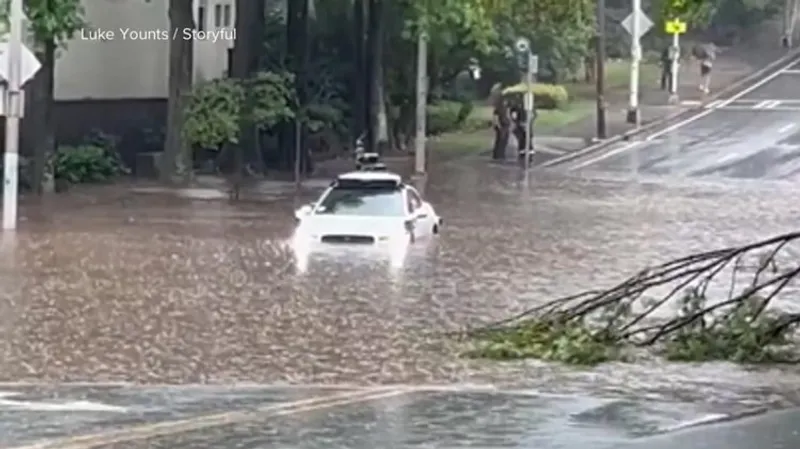
TLDR: ATLANTA—A Waymo self driving car stalled after driving into flood waters in Atlanta during heavy rain. No passengers were inside, underscoring how storms can outpace autonomy.
Key Takeaways:
- Heavy rain hit Atlanta and turned streets into flood zones, creating a high risk test for driverless systems.
- Waymo’s self driving car entered flood waters and stalled; the ride was empty at the time of the incident.
- The event highlights the gap between mapped routes and real time storm hazards, raising questions about sensor limits in deep water.

Autonomous cars love predictable streets, but water does not care about software. When the road turns into a moving obstacle, the “driver” becomes the weather itself.
Autonomous cars love predictable streets, but water does not care about software. When the road turns into a moving obstacle, the “driver” becomes the weather itself.
Q&A
How do self driving systems decide to enter or avoid flooded streets if water depth changes quickly?
They rely on sensor readings and risk models. In fast changing storms, the car may detect depth too late or misclassify the surface as passable, which can lead to stalling or withdrawal.
What immediate safeguards could reduce future incidents during extreme rain?
Stronger flood detection thresholds, tighter geofenced behavior during storm alerts, and aggressive stop and retreat logic when water obscures lane markings can lower risk.
Why does “no passengers inside” still matter for public trust and testing goals?
It signals the operator prioritized safety by running an unoccupied test or ride. Still, the public impact comes from how visible the failure mode is during bad weather.
Could city flood response or traffic management prevent these scenarios more effectively than vehicle upgrades alone?
Yes. Faster road closures, clearer barricades, and dynamic routing guidance can keep driverless vehicles away from hazardous zones before sensors ever get involved.
What happens next for Waymo after a high visibility autonomy failure in severe conditions?
Expect incident review, updates to hazard models, and possible changes to operational areas or storm policies, especially around water depth, visibility loss, and recovery behavior.





No comments yet. Be the first to share your thoughts!