
Wall Street Braces for SpaceX With Stress Test, Watch Parties
 SpaceX
 Wall Street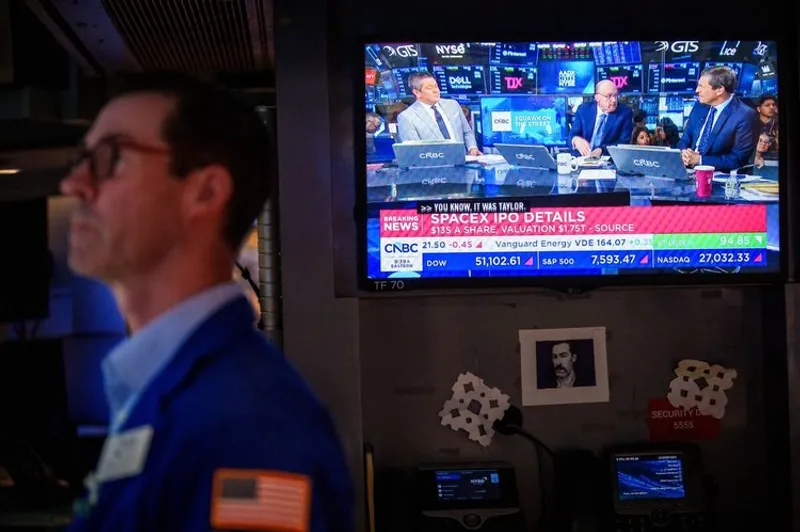
TLDR: NEW YORK—Wall Street banks are running underwriting and operations stress tests for a potential SpaceX IPO and planning watch parties to manage a mega listing’s market plumbing. The setup matters for investors and issuers who rely on smooth pricing, allocations, and trading if valuations surge.
Key Takeaways:
- Banks have spent months debating SpaceX valuation, but IPO execution has become the real bottleneck behind the scenes.
- Institutions are preparing underwriting plumbing through stress tests and coordinating watch parties for live decision making.
- If the IPO scales, markets will test not just a price, but allocation mechanics and trading capacity at peak attention.

Valuation drama gets the headlines, but IPO plumbing is where deals either click or clog. SpaceX may be the biggest story, yet execution choreography is the part everyone quietly sweats.
Valuation drama gets the headlines, but IPO plumbing is where deals either click or clog. SpaceX may be the biggest story, yet execution choreography is the part everyone quietly sweats.
Q&A
Why would banks treat operational stress tests as a bigger risk than the valuation debate?
Because even a well liked price can unravel if allocation systems, order routing, and post launch liquidity fail under heavy demand.
What do watch parties actually change for investors and issuers?
They concentrate decision making on pricing, stabilizing activity, and contingency responses so the first hours match the plan rather than improvise.
How does a possible largest IPO in history alter trading behavior on the first day?
It can amplify volatility through concentrated buy side attention, faster rumor spread, and heavier use of liquidity facilities to absorb imbalances.
Could SpaceX avoid some execution risk by delaying launch, and what would that signal to markets?
A delay can reduce immediate plumbing pressure but also signals uncertainty, which can change investor positioning and demand timing.
What precedent from prior meg IPOs suggests the real test is after pricing, not during it?
Historically, post pricing allocations, stabilization effectiveness, and two way liquidity determine whether the stock settles into sustainable trading.




No comments yet. Be the first to share your thoughts!