
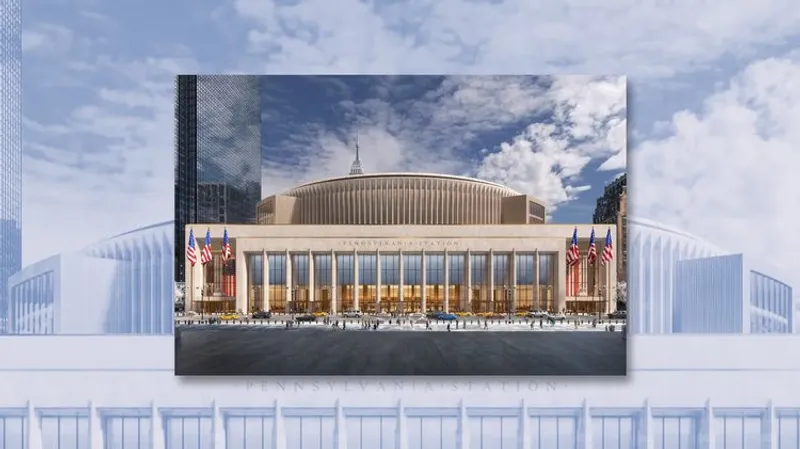
TLDR: NEW YORK—New renderings show an $8 billion Penn Station redesign with raised ceilings, bronze accents, and far more natural light, following Amtrak and the DOT takeover. The plan starts breaking ground in 2027 and requires demolishing MSG’s Infosys theater and parts of Garden walls.
Key Takeaways:
- Penn Station has long suffered windowless spaces and confusing underground tunnels, despite its famous Beaux Arts origins.
- Amtrak and the U.S. Department of Transportation took over after the MTA, selecting Halmar and Skanska on May 19.
- Developers plan to expand natural light from 3,400 square feet to more than 55,000, but must remove the Infosys theater at MSG.

This renovation is less about escaping the past and more about rescuing the vibe Penn Station used to have, at a very modern price tag. New light, bigger rooms, and bronze details might finally make the ride feel like arriving somewhere.
This renovation is less about escaping the past and more about rescuing the vibe Penn Station used to have, at a very modern price tag. New light, bigger rooms, and bronze details might finally make the ride feel like arriving somewhere.
Q&A
What is the biggest risk to the 2027 groundbreaking timeline if politics keeps circling the project?
Every handoff can trigger new reviews, updated permitting, and budget resets, which tend to slow large transit builds even when design work is already advanced.
Why does boosting natural light matter so much in a subway dominated station?
Lighting changes how crowds move and how people feel while waiting and transferring, reducing the claustrophobic perception that often makes stations feel unsafe or exhausting.
How does demolishing the Infosys theater at Madison Square Garden reshape event planning around the station?
It forces MSG to rework venue availability and circulation during construction, and it can alter which performances are scheduled during the years before the station opens.
If the design nods to the original Beaux Arts Penn Station, what would a true success look like beyond looks?
Passengers would need faster, clearer wayfinding, improved platform and concourse flow, and an experience that feels coherent from street entrance to train.
What precedent does the Penn Station comeback follow in other major cities that rebuilt old landmarks?
Many cities have balanced restoration inspiration with functional upgrades, keeping signature architectural cues while rebuilding the core circulation for today’s crowd volumes.





No comments yet. Be the first to share your thoughts!