
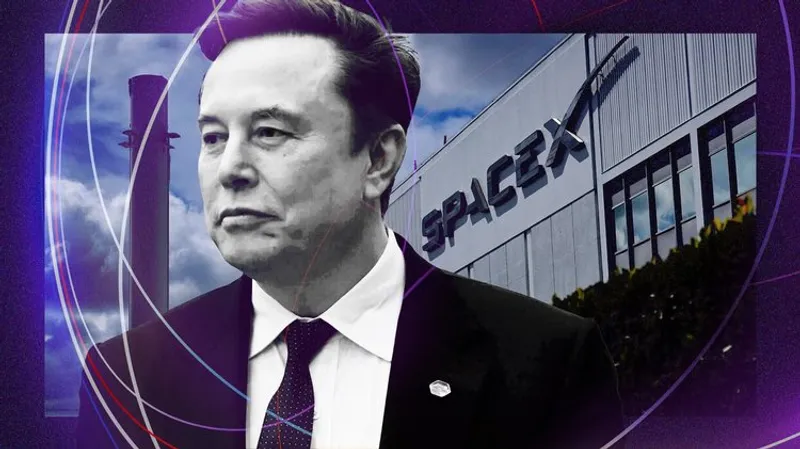
TLDR: SpaceX plans to raise about $75 billion at an estimated $1.75 to $2 trillion valuation, but Starship delays, launch capacity bottlenecks, and xAI losses raise doubts.
Key Takeaways:
- Launch access stays scarce even as SpaceX dominates: Falcon 9 delivered 165 orbital launches in 2025, while Rocket Lab ran 21.
- Starship has 12 R and D flights since 2023 with six successes, and SpaceX expects payload delivery to orbit in the second half of 2026.
- Investor faith leans on ambitious orbital AI and Starship economics, yet defense and Starlink cash flow face pressure from slower than promised rocket ramp ups.

SpaceX is selling a future where rockets are cheap and computing happens in orbit, but the present still depends on schedules, throughput, and proof. Markets love the story until the timing bites.
SpaceX is selling a future where rockets are cheap and computing happens in orbit, but the present still depends on schedules, throughput, and proof. Markets love the story until the timing bites.
Q&A
If Starship cannot ramp quickly, which SpaceX revenue streams get most squeezed first
Orbit dependent plans for next generation satellites, Starlink Mobile expansion, and orbital AI compute all rely on launch cadence. Slower Starship reliability pressures deployment timelines across those growth bets.
Why does the launch bottleneck matter as much for broadband and defense as it does for science demos
Even when hardware works, payload delivery gates everything. Amazon has a July 30 FCC deadline and has deployed only about 10% of its planned 3,232 satellites so far.
Could competitors win by being the right size rather than the cheapest
Space investors hear that space is not one size fits all. Rocket Lab is betting on different launch classes, while ULA and Blue Origin struggle to bring new rockets into regular service.
What has to be true for orbital AI data centers to move from concept to cash flow
SpaceX would need thousands of mega rocket flights, solve radiation hardening and heat dissipation, and prove that processing in orbit reduces costs enough to beat Earth energy and land constraints.
Why might public market scrutiny improve outcomes even if it makes some teams nervous
Public analysts tend to demand measurable progress and timelines. Beck argues that public questions make it harder to sell purely speculative narratives, which can weed out overstated promises.





No comments yet. Be the first to share your thoughts!