
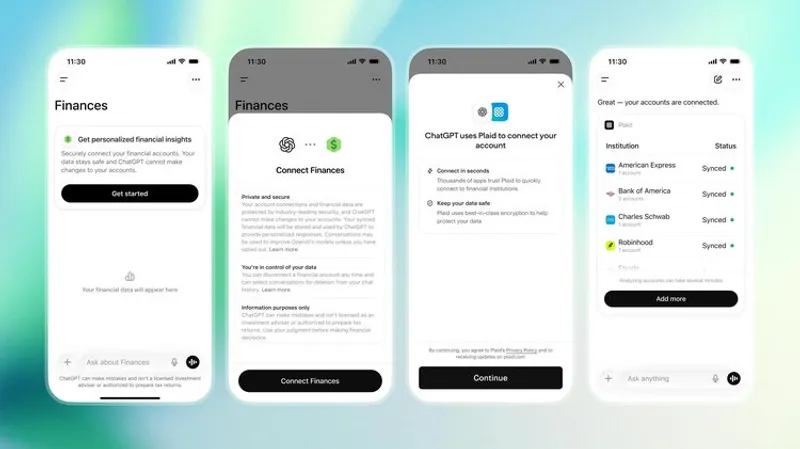
TLDR: WASHINGTON—OpenAI lets ChatGPT Pro users in the U.S. link bank accounts via Plaid for personalized budgeting and planning. It shows balances, spending, and payments without full account numbers.
Key Takeaways:
- OpenAI rolls out a ChatGPT personal finance preview for Pro users in the United States using Plaid to connect accounts.
- Linked accounts power a dashboard covering portfolio, spending, and upcoming payments, with examples like American Express and Bank of America.
- Users gain data driven patterns for goals and risk, while keeping control through disconnection, deleting finance memories, and temporary chats.

This is the moment AI budgeting stops being vibes and starts being receipts. The real test will be whether Plaid connected numbers make advice feel smarter, not just louder.
This is the moment AI budgeting stops being vibes and starts being receipts. The real test will be whether Plaid connected numbers make advice feel smarter, not just louder.
Q&A
What happens if the connected data conflicts with what a user expects to see in their bank app?
Users can disconnect and delete finance specific memories, but they will still need to spot reconciliation issues early to avoid acting on stale or miscategorized transactions.
Why does OpenAI emphasize it cannot view full account numbers, and how does that change risk?
By limiting exposure to sensitive identifiers, OpenAI reduces the chance of misuse from an account listing view, shifting privacy risk toward transaction interpretation and data retention controls.
How could Intuit support landing a larger audience even if features launch later?
If Intuit connectors improve tax and bookkeeping context, ChatGPT can connect budgeting to filing reality, which may make the system feel more useful when it matters most.
What does a 200 million monthly budgeting user claim signal for competitors?
It suggests demand for financial Q and A already exists, so the winning edge will likely come from account linking depth, partner coverage, and the quality of action oriented insights.
What policy and compliance pressure could follow if the advice becomes more concrete?
More precise planning tools may attract scrutiny around financial guidance, disclosures, and liability, especially when users rely on patterns to make investment or travel decisions.




No comments yet. Be the first to share your thoughts!