
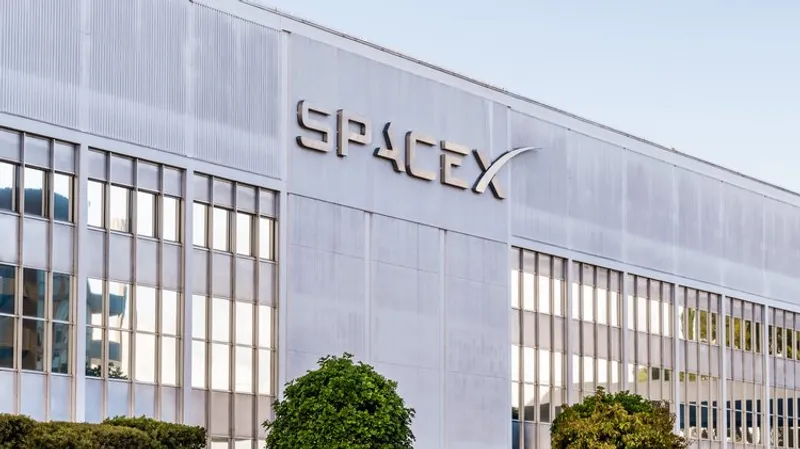
TLDR: NEW YORK—Google is reportedly negotiating with SpaceX to support orbital data centers through Project Suncatcher, in discussions also involving other rocket firms.
Key Takeaways:
- Google’s Project Suncatcher follows earlier talk from Sundar Pichai about “normal” space data centers, before SpaceX scaled up orbital ambitions.
- The Wall Street Journal reports talks with SpaceX for orbital data center infrastructure, plus talks with other rocket launch companies.
- Even with AI compute promises, experts warn satellite GPUs face radiation errors and hard cooling limits, while millions of launches could stress orbit safety.

Competition meets collaboration: Google wants space based compute, while SpaceX wants scale. The real race is not launching satellites, it is making them stay reliable and useful.
Competition meets collaboration: Google wants space based compute, while SpaceX wants scale. The real race is not launching satellites, it is making them stay reliable and useful.
Q&A
If Google pursues orbital AI inference, what would need to work first besides launching hardware?
You would need robust fault tolerance for radiation induced errors, predictable thermal management, and a network design that keeps latency low enough for real world AI tasks.
Why does partnering with SpaceX change the odds compared with building everything through smaller rocket or satellite providers?
SpaceX’s launch cadence and cost model could compress timelines, but the bigger impact would be integration speed across rockets, payload constraints, and constellation deployment.
What happens if experts keep finding that inference in space cannot reach scale?
Google could pivot toward more limited roles for satellites, like edge preprocessing or data relays, while doing the heavy inference on Earth or in different orbital layers.
How might atmospheric and orbital safety concerns affect Google’s technical roadmap?
Regulators and insurers may demand stricter debris mitigation, orbital lifetime planning, and collision avoidance, which can raise costs or slow constellation expansion.
Could this become a platform play instead of a single constellation, and what would that mean for competitors?
If Google turns orbital compute into a reusable service layer, other firms could license capacity or design around Google and partner infrastructure, shifting competition from satellites to software and operations.
Top in Big Tech

Apple buys Color.io to intensify Creator Studio pressure

Women CFOs steer AI capex race across Big Tech

Microsoft Build bets: winners endure, some vanish

WhatsApp faces a new AI privacy test from Meta

No comments yet. Be the first to share your thoughts!