
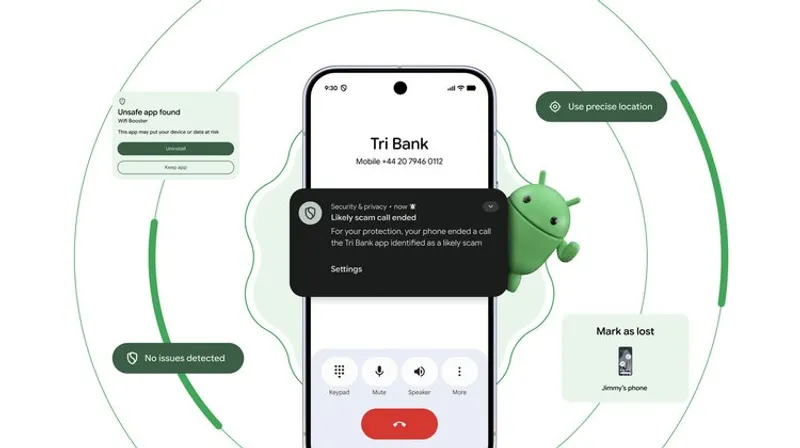
TLDR: LONDON—Google will block Android calls impersonating partnered banks and expand Live Threat Detection to catch scammy app behavior.
Key Takeaways:
- Google is rolling out Android security upgrades after Android Show: I/O Edition, focusing on scams, app abuse, and device control.
- A new spoofing protection auto ends calls impersonating Revolut, Itaú, and Nubank, plus notifies users.
- Live Threat Detection adds dynamic signal monitoring for SMS forwarding and accessibility tricks, plus Android 17 theft and temporary location controls.
- New Failed Authentication Lock settings and biometric lost device unlocking aim to keep stolen phones unusable without face or fingerprint access.

Scam call tech keeps leveling up, so Google is meeting it with two defenses: faster call stopping and sharper app behavior scanning. The catch is who gets protected first, since US access depends on future bank partnerships.
Scam call tech keeps leveling up, so Google is meeting it with two defenses: faster call stopping and sharper app behavior scanning. The catch is who gets protected first, since US access depends on future bank partnerships.
Q&A
Why does caller ID spoofing still work, and what changes when Android auto ends certain bank impersonation calls?
Spoofing can make a call look legitimate at a caller ID level. Android side controls can override that trust by matching the number to known impersonation patterns from participating banks and terminating the call before the user can share data.
What happens to scam attempts when Google blocks calls from only a few partnered banks?
Scammers often pivot to unpartnered banks or other collection angles. As coverage expands, attackers typically follow the gaps, pushing Google to keep adding institutions quickly.
How can Live Threat Detection spot abuse without waiting for app reviews or user reports?
Dynamic signal monitoring tracks runtime behaviors, such as SMS forwarding and suspicious accessibility use, so it can flag risky patterns as they occur instead of relying solely on after the fact reports.
Could aggressive blocking or detection create false positives that annoy users and app makers?
Any behavioral detection risks overreach if signals are ambiguous. Google will need tight thresholds and feedback loops so legitimate apps that use accessibility or messaging do not get unfairly penalized.
What does biometric unlocking on lost Android 17 devices mean for real theft scenarios?
It shifts the goalpost from guessing a passcode to bypassing biometric gates. Thieves may still damage devices or trigger resets, but the core risk of immediate access drops if the biometric check remains enforced.





No comments yet. Be the first to share your thoughts!