
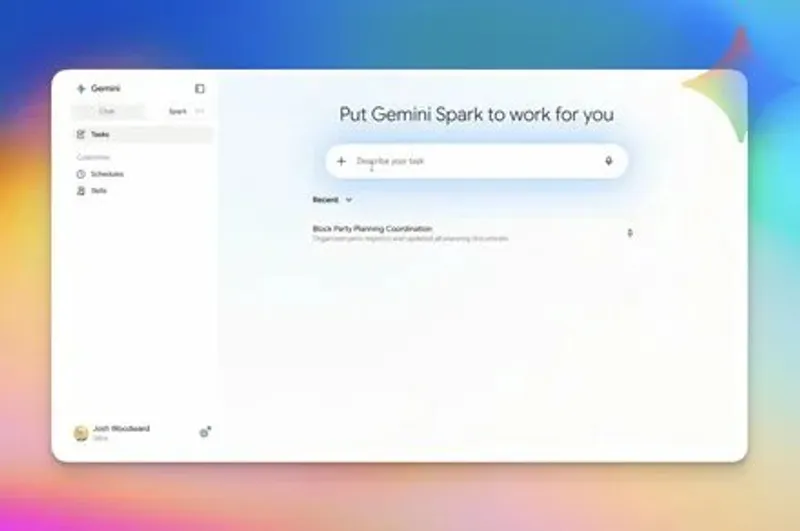
TLDR: SAN FRANCISCO—Google unveiled Gemini Spark at Google I O 2026, an agent that breaks errands into steps and runs them in the background on dedicated virtual machines. It can use Gmail, Drive, Docs, and more, then follow up, while you close your laptop.
Key Takeaways:
- Gemini Spark targets the biggest complaint about AI assistants: you must babysit the task until it finishes.
- Google says Gemini Spark uses Gemini 3.5 with Google Antigravity harness, working across in house apps and handling follow ups while you walk away.
- Rollout starts with trusted testers, then beta for Google AI Ultra subscribers, with AI Ultra priced at $100 month for the new tier and $200 month for the existing one.

It is not just another chat box. Gemini Spark sounds like a tiny operations team that waits for your okay, then goes to work, which is exactly why it feels almost unfair.
It is not just another chat box. Gemini Spark sounds like a tiny operations team that waits for your okay, then goes to work, which is exactly why it feels almost unfair.
Q&A
What does it mean that Spark runs on dedicated virtual machines?
It suggests the agent can continue working even if your device sleeps, which could make longer, multi step tasks feel more like automation than a live assistant.
Why does using in house apps matter for trust and usefulness at launch?
Tighter integration with Gmail, Drive, and Docs likely reduces friction and improves permissions handling, so the agent can actually complete tasks end to end early on.
How could Chrome browser agent support change everyday “errand” workflows?
A browser agent can convert research into actions like forms, checkouts, and scheduling, which turns planning into execution without switching between tools.
What happens if the agent needs information it cannot access?
Google says Spark draws from email, documents, and chats, so missing inputs could force manual prompts, raising the stakes for clear permission design.
Could the pricing shift for AI Ultra accelerate agent adoption?
More predictable monthly costs can push users to try background automation sooner, but adoption may still hinge on reliability and how often agents need confirmation.





No comments yet. Be the first to share your thoughts!