
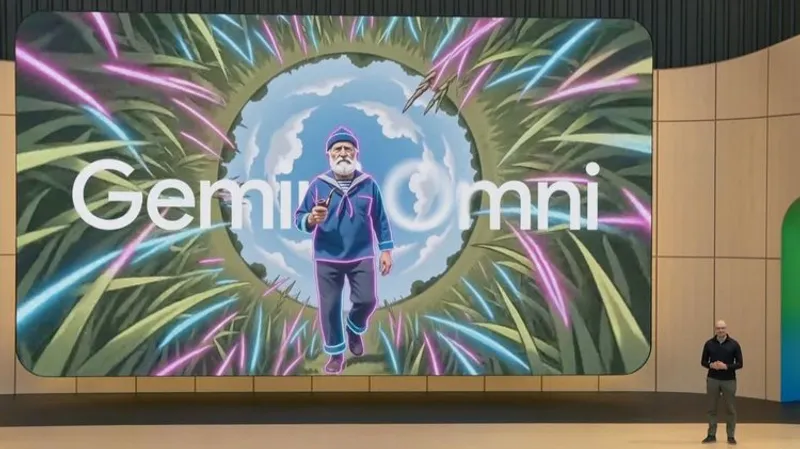
TLDR: LONDON—Google introduced Gemini Omni Flash at Google I O 2026, letting Gemini create and edit video from text, images, audio, or clips. It launches in the Gemini app, Google Flow, YouTube Shorts, and YouTube Create, and pushes trust via SynthID watermarking and identity protections.
Key Takeaways:
- Google is reframing video editing as an ongoing conversation with Gemini, not a timeline full of tools.
- Gemini Omni Flash creates and revises videos from text, images, audio, and existing video while preserving characters, continuity, and coherent motion.
- SynthID watermarking plus verification tools across Gemini, Chrome, and Search aim to build trust as AI media becomes easier to make.

If editing stops feeling like a craft and starts feeling like talking, people will make more video, faster, whether they are ready or not. The only real question is whether the watermarking and identity protections keep up with the speed.
If editing stops feeling like a craft and starts feeling like talking, people will make more video, faster, whether they are ready or not. The only real question is whether the watermarking and identity protections keep up with the speed.
Q&A
How does conversational editing change what creators need to learn?
It shifts skill away from precise timeline control toward prompt clarity and iterative instruction, which could favor rapid experimentation over traditional editing workflows.
What does preserving motion and continuity imply for future editing requests?
If the system maintains physics like gravity and object behavior, users can request bigger scene changes without the usual jumpy resets between prompts.
Why might AI watermarking matter even if users share videos privately?
Platform level verification across Gemini, Chrome, and Search suggests attribution can be checked downstream, not just at upload time.
What happens when avatar creation becomes common for everyday users?
Expect demand for quick self generated video identities, plus pressure for stronger consent, audit trails, and clearer limits on voice and speech modification.
How does this raise the bar for competing AI video tools?
Competition may shift from generating pretty clips to delivering consistent, controllable edits that feel simple enough for non editors, which is harder to fake.



No comments yet. Be the first to share your thoughts!