
German court pressures Google: AI Overviews carry direct liability
 AI
AI Google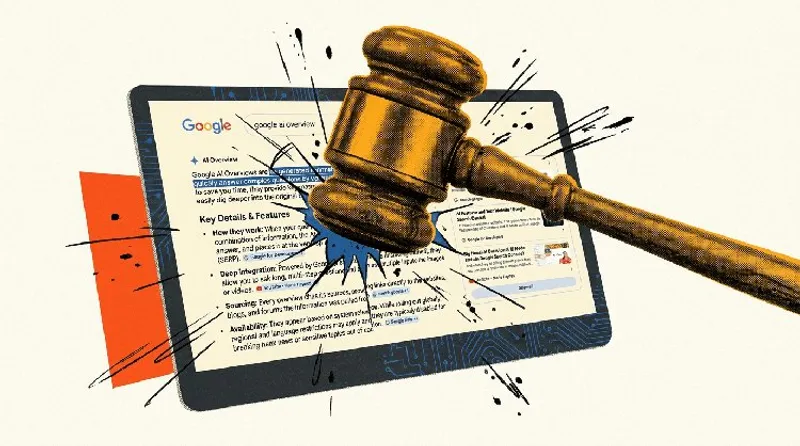
TLDR: MUNICH—A Munich court ruled Google is directly liable for false claims in AI Overviews, treating them as Google content. The ruling follows Google linking two publishers to scams via AI summaries.
Key Takeaways:
- Background: Germany’s courts had limited search engine liability under older rules for third party discoverability.
- Main event: The Regional Court of Munich issued a temporary injunction in case 26 O 869/26 over scam related AI links to two publisher firms.
- Meaning: AI Overviews can trigger direct infringement liability, since the AI rewrites sources into new statements users rarely verify.

This ruling turns AI summaries from a helpful extra into something closer to publishing, with legal receipts. If courts treat paraphrased outputs as a provider’s own words, AI accuracy stops being a product metric and becomes a liability strategy.
This ruling turns AI summaries from a helpful extra into something closer to publishing, with legal receipts. If courts treat paraphrased outputs as a provider’s own words, AI accuracy stops being a product metric and becomes a liability strategy.
Q&A
How will Google change AI Overviews workflows after the court says users rarely verify sources?
Google will likely tighten citation alignment, add confidence thresholds for unsupported links, and implement earlier human or automated checks for claims that do not appear in underlying pages.
What happens to other AI assistants that summarize web content if Munich’s reasoning travels internationally?
Operators of tools that generate substantive statements could face similar direct liability arguments, especially when outputs cannot be traced cleanly to cited sources.
Why did the court reject the idea that users should fact check on their own?
The decision treated the AI overview as a self contained statement and noted that the structure and wording can mislead even without the user clicking sources.
Could plaintiffs have sued the websites the AI used as sources, and why did that matter?
The court emphasized those source sites did not make the challenged claims, leaving victims with a protection gap that pushed liability back onto Google.
If appeal outcomes hinge on legal definitions, what key framing will lawyers fight over next?
The central dispute will likely be whether AI overviews are independent new statements attributable to the provider, rather than mere indexing or exposure of third party content.




No comments yet. Be the first to share your thoughts!