
Ferveret’s reactor inspired cooling pressures data centers to rethink efficiency
 AI
AI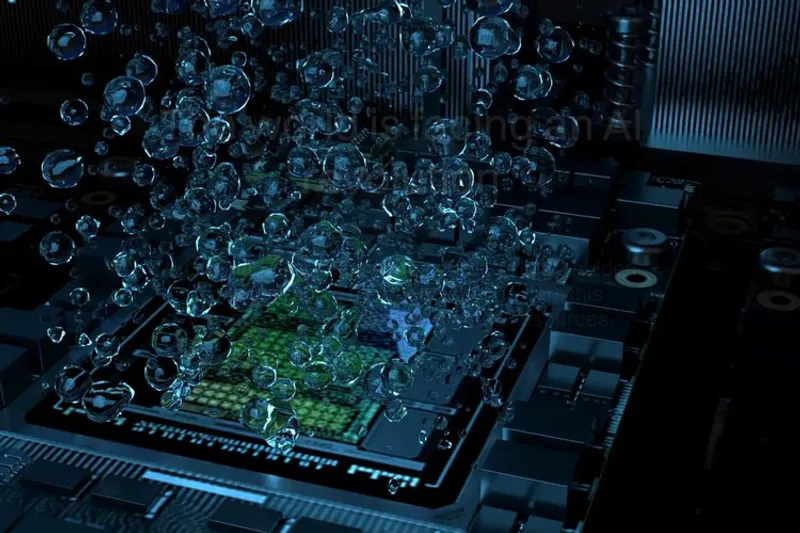
TLDR: WASHINGTON—Startup Ferveret is testing Adaptive Phase Cooling that submerges servers in specialized liquid to cut electricity and water needs by improving heat transfer. Results from UCLA research show 15 percent better computational power efficiency and claims of 35 percent more AI tokens per watt for partners including CleanSpark and Switch.
Key Takeaways:
- AI-driven data center growth pushes cooling toward 9 to 17 percent of US electricity demand forecasts.
- Ferveret applies nuclear reactor subcooled boiling, producing smaller bubble cycles and APC boxes for servers.
- Study results point to 15 percent higher efficiency and up to 35 percent more tokens per watt with zero water.

If fans and chilled water have been the default data center soundtrack, Ferveret wants to swap it for reactor grade bubble physics. It sounds nerdy until you look at the numbers: more tokens without burning extra power or hunting for water.
If fans and chilled water have been the default data center soundtrack, Ferveret wants to swap it for reactor grade bubble physics. It sounds nerdy until you look at the numbers: more tokens without burning extra power or hunting for water.
Q&A
What would need to be proven in the real world before hyperscalers bet on this cooling approach at scale?
Operators will need long run reliability data on sensors, liquid chemistry stability, modular box uptime, and maintenance workflows compared with existing immersion systems.
Why does smaller bubble behavior matter more than simply using liquid instead of air?
Heat transfer depends on how efficiently vapor bubbles form, detach, and recondense at the chip surface, which directly sets the thermal boundary conditions.
How might water free cooling change data center siting decisions beyond electricity costs?
It can reopen locations with limited water access, potentially pairing renewable dense sites like solar regions with capacity that would otherwise be blocked.
Could APC shift the competitive advantage from raw compute speed to system level power efficiency?
If tokens per watt becomes a standard KPI, startups that optimize thermal and power control could become as influential as chip designers.
What happens if AI workloads keep rising faster than the grid can deliver power?
Cooling and power control may become a bottleneck relief valve, turning “watt availability” into “token output” through tighter thermal efficiency.
Top in Startups

SpaceX IPO courts investors with AI and multiplanetary ambition

SpaceX IPO splits bull and bear bets ahead

OpenAI IPO filing turns AI funding race up fast

Sandstone bets $30M on in house legal workflows

No comments yet. Be the first to share your thoughts!