
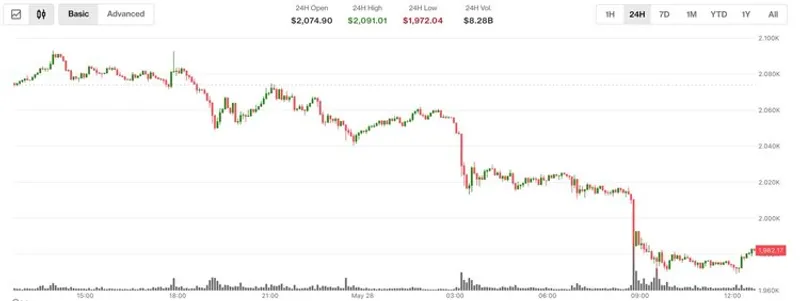
TLDR: Ether slid below $2,000 for the first time since late March while ETH futures open interest hit 16.39 million. The divergence points to aggressive leveraged shorting and net selling, pressuring holders and U.S. spot ETF investors.
Key Takeaways:
- Ether fell nearly 8% over a week as risk aversion rose, with negative sentiment sharpened by U.S. spot ETF outflows and Ethereum Foundation departures.
- ETH futures open interest climbed for a third straight day to 16.39 million tokens, while OI adjusted CVD turned negative and spot price kept dropping.
- That futures activity signals bearish positioning that can intensify price swings, and ETF outflows show spot demand is still fading.

This is one of those market moods where the chart looks tired but the leverage keeps dialing up. When futures get busier as spot sinks, it is often shorts doing the driving, not cautious dip buying.
This is one of those market moods where the chart looks tired but the leverage keeps dialing up. When futures get busier as spot sinks, it is often shorts doing the driving, not cautious dip buying.
Q&A
If futures open interest stays high, what price behavior should traders watch for next?
Look for liquidation cascades around key support levels, because high open interest with negative CVD can turn small dips into fast, order driven drops.
Why would leveraged selling show up more clearly in futures than in spot ETFs?
Futures let traders express bearish views instantly and at scale, while ETF flows reflect slower, broader investor risk decisions that can lag behind trading.
What does a negative OI adjusted cumulative volume delta suggest about who is hitting the button?
It implies market orders dominating over passive limit orders, so price is moving because traders are willing to trade through liquidity, not simply waiting for better fills.
Could the narrative shift from Ethereum tech progress to ETH token value change stabilize demand?
Stability likely depends on clearer evidence that ecosystem growth converts into ETH demand, not just network activity. Without that link, sentiment can stay fragile even when development continues.
Historically, how have ETH sell offs tended to resolve when futures positioning turns persistently bearish?
Markets often snap back only after shorts get crowded or catalysts force real buying. Until then, bearish positioning can keep downside momentum alive.
Top in Crypto

Roswell spots a municipal Bitcoin wallet beside UFO lore

US Iran strikes spark near $1 billion crypto wipeout

Bitcoin slips under $73,000 as IBIT outflows surge

CFTC moves to unwind Gemini settlement amid whistleblower dispute

No comments yet. Be the first to share your thoughts!