
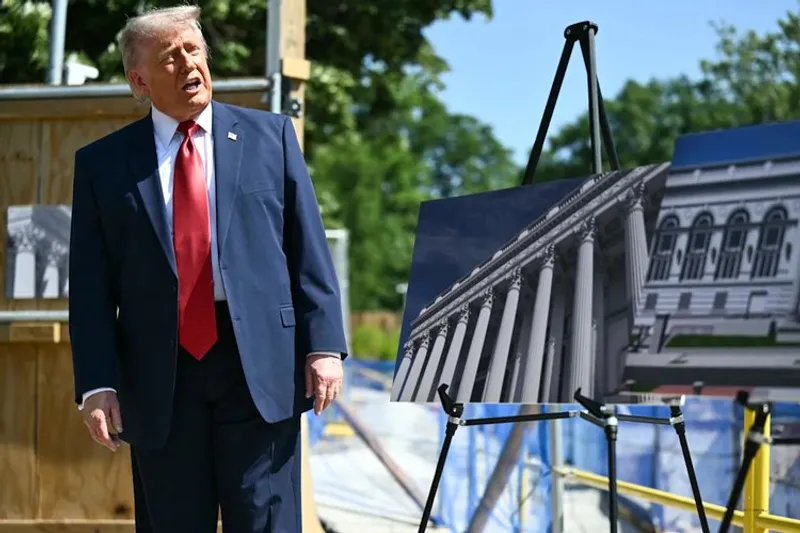
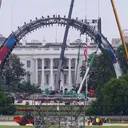
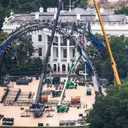
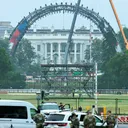
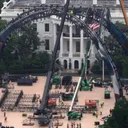
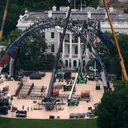
TLDR: WASHINGTON—UFC’s June 14 White House card is moving into South Lawn construction, with cranes joining an existing build as damage nears $1 million.
Key Takeaways:
- The UFC White House event lands June 14 on the White House South Lawn, with a major rig arriving after off site assembly.
- The headliners feature Ilia Topuria vs Justin Gaethje for the lightweight title and Alex Pereira vs Ciryl Gane for an interim heavyweight strap.
- Dana White says Trump gets 1,000 invite seats, he gets 200, and the rest go to every branch of the U.S. military as costs and disruptions mount.

A tented arena is getting welded onto one of the world’s most visible backdrops, because nothing says spectacle like peak pageantry plus a million dollar risk.
A tented arena is getting welded onto one of the world’s most visible backdrops, because nothing says spectacle like peak pageantry plus a million dollar risk.
Q&A
What kind of logistical pressure does a UFC rig create on the South Lawn that normal venues do not?
The White House setting forces tight coordination around security perimeters, protective coverings for turf and landscaping, and limited tolerance for noise, traffic, and crowd staging.
How might the military heavy invite plan change the event atmosphere compared with typical UFC shows?
With service members taking a large share of seats, the crowd likely leans into unified spectacle, ceremonies, and patriotic pacing instead of the usual mix of casual and hardcore fans.
Why does a heavyweight interim title between Alex Pereira and Ciryl Gane raise stakes beyond the belt?
A move up in weight compresses preparation time and tests how power and durability translate, so the winner gains both legitimacy and momentum that can reshape matchups.
If construction costs run close to the projected $1 million damage figure, what happens if delays or weather threaten fight readiness?
UFC would need contingency plans for staging, lighting, and safe fighter access, because the event depends on both the build and the broadcast setup being completed on schedule.
Could this White House experiment influence future fight promotions that want high profile sites without permanent infrastructure?
If it works, it signals that temporary builds can support major combat sports broadcasts, but repeated disruptions and security complexity will likely limit how often presidents host marquee events.
No comments yet. Be the first to share your thoughts!