
 Chinese
 Tesla
Tesla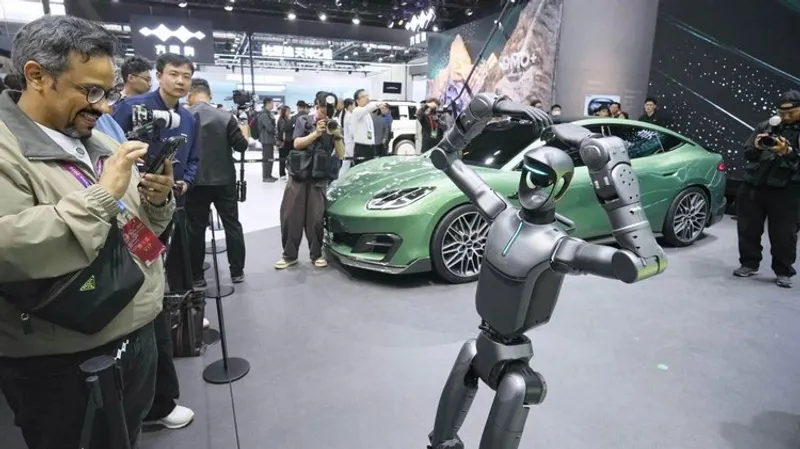
TLDR: BEIJING—Chinese EV giants including BYD and Xpeng are ramping humanoid robot production plans to challenge Tesla’s ecosystem, betting AI expands profits. BYD also unveiled its God’s Eye tech amid a broader push in EV competition and overseas growth.
Key Takeaways:
- EV rivalry is shifting from cars to AI and robotics, with BYD and Xpeng positioning humanoid robots as the next sales battleground.
- The push centers on mass producing humanoid robots, while BYD’s God’s Eye adds another technology layer to its EV and software strategy.
- If robot commercialization lands, Chinese firms could broaden revenue beyond transport and pressure Tesla on both hardware and AI platforms.

When car makers start talking like robot companies, it is not a vibe, it is a business pivot. The winners will be the ones who can sell AI outcomes, not just show demos.
When car makers start talking like robot companies, it is not a vibe, it is a business pivot. The winners will be the ones who can sell AI outcomes, not just show demos.
Q&A
Why would humanoid robots matter more than simply improving EV autonomy for Chinese makers competing with Tesla
Humanoid robots target new buyer budgets beyond vehicle sales, creating recurring demand for AI compute, fleets, and services, which can diversify margins if EV pricing stays competitive.
What has to go right for humanoid robot plans to move from pilots to mass production
Manufacturers need reliable industrial and consumer use cases, scalable manufacturing yield, stable supply chains for sensors and actuators, and software that performs in real environments.
How might Tesla respond if Chinese competitors gain traction with robot related AI ecosystems
Tesla could accelerate partnerships, deepen its own robotics roadmap, or tighten the integration between vehicle data and AI tooling to defend its platform and developer momentum.
Could overseas growth plans for EVs affect how quickly robot projects expand outside China
Yes. Global EV distribution can double as a testing and sales channel for robot deployments where service networks and industrial customers already exist.
What is the risk if humanoid robots become a marketing story instead of a profitable one
If unit economics fail, firms may pour R and D into hardware without sustained revenue, forcing later pivots that can weaken balance sheets and delay adoption across markets.





No comments yet. Be the first to share your thoughts!