
 Apple
Apple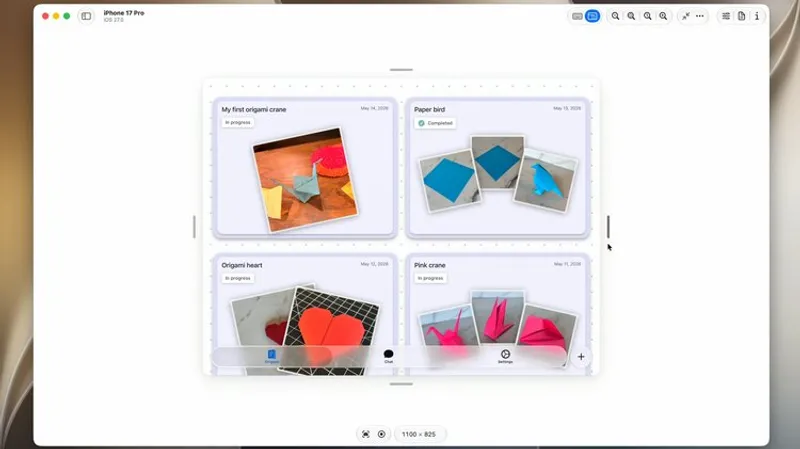
TLDR: Apple seeded iOS 27 beta with foldState and angleDegrees and pushed iPhone Mirroring resizing. Developers must redesign for foldable screens.
Key Takeaways:
- Apple used Platform State of the Union to prep iPhone Mirroring, iOS apps, and simulators for folding hardware.
- Developers spotted new iOS 27 beta terms foldState and angleDegrees plus a built in display count API.
- Apple is building adaptability requirements early, using iPhone Ultra foldable specs and iOS resizing tools to avoid app breakage.
- Resizing expanded iPhone Mirroring on Mac with horizontal stretching, plus a Resizable iOS Simulator for many aspect ratios.

The origami demo looked relaxing, but Apple quietly made it a stress test. By the time iPhone Ultra arrives, it wants apps to bend without breaking.
The origami demo looked relaxing, but Apple quietly made it a stress test. By the time iPhone Ultra arrives, it wants apps to bend without breaking.
Q&A
What does foldState and angleDegrees imply about how apps should react during real fold animation?
It suggests Apple wants apps to track fold progression and adjust layouts, not just swap for a new screen size after the fold completes.
Why does the built in displays count API matter more than it sounds for foldable app behavior?
If a device can present multiple built in display surfaces, apps must treat display enumeration as dynamic, which affects rendering, media placement, and multi window logic.
How might the Resizable iOS Simulator change the way teams validate UI before launch?
Teams can catch layout failures across aspect ratios earlier, reducing last minute fixes when hardware finally ships.
Could iPhone Mirroring resizing force unintended design compromises on developers used to fixed targets?
Yes, teams may need responsive UI patterns and testing cycles that prioritize adaptable geometry over pixel perfect layouts for a single form factor.
What happens next if developers lag behind Apple’s adaptability mandate?
Apple likely accelerates platform consistency by tightening expectations in tooling and APIs, pushing laggards into redesign work that may delay app updates or features.
Top in Big Tech

Apple’s Siri AI reveal tests investor patience

Apple’s foldable iPhone gamble tests AI hype with hardware

Mississippi residents sue xAI and SpaceX over 24 7 noise

Apple tightens App Store rules, risking removals

No comments yet. Be the first to share your thoughts!