
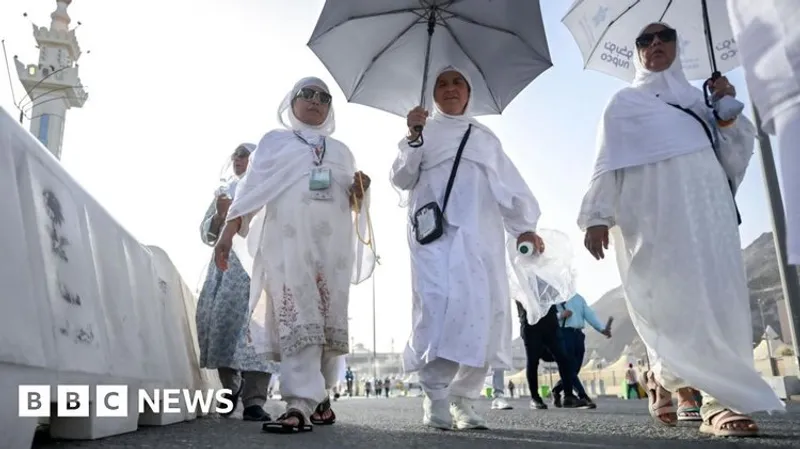
TLDR: MECCA, Saudi Arabia—More than 1.51 million foreign pilgrims arrived for Hajj in Saudi Arabia despite Iran war fears as Saudi air defenses brace against aerial threats and 45C heat tests safety.
Key Takeaways:
- Saudi Arabia expects 1.51 million foreign pilgrims, up about 11,000 from last year, even as the region steadies after US Israel Iran strikes.
- Saudi defense officials posted that air defense batteries protect Mecca holy sites, while pilgrims hit 45C temperatures on the first day.
- Hajj continues because faith and logistics still outrun risk, pushing Saudi authorities to manage heat deaths and security risks at the same time.

Faith has a way of making politics feel distant, even when Saudi skies are on high alert. For pilgrims, the biggest battle starts with heat and ends at the Kaaba, not the headlines.
Faith has a way of making politics feel distant, even when Saudi skies are on high alert. For pilgrims, the biggest battle starts with heat and ends at the Kaaba, not the headlines.
Q&A
Why did air travel disruption not stop Hajj this year?
Saudi officials had time to reroute flights and surge capacity after months of uncertainty, and many pilgrims absorbed extra cost rather than forfeit the once in a lifetime window for eligible travelers.
What does Saudi air defense signaling suggest about the threat level they plan for?
Public posts about batteries around Mecca imply planners expect aerial threats to remain credible, so they want pilgrims to see visible protection while command systems run quietly in the background.
How could 45C heat change the risks compared with past Hajj years?
Higher heat increases dehydration and heat stroke odds during the tawaf and nighttime tent stays, so crowd movement pacing and medical readiness become as critical as security.
If the Iran conflict escalates again, what part of the Hajj schedule is most vulnerable?
The busiest crowd transitions, such as routes between Mecca, Mina, and Mount Arafat, demand predictable transport and tight timing, so any disruption hits people immediately.
What long term effect might Hajj attendance decisions have on regional travel planning?
If pilgrims keep coming through political shocks, airlines and governments may treat Hajj as a high priority disruption exercise, building stronger contingency plans for similar crisis periods.
Top in Travel

Perfect Match Finale Couples Split After Filming

Liberty sputter as Mercury return for playoff rematch

OpSail Sail4th 250 turns New York Harbor into spectacle

Hochuli launches New York Winter Olympics bid momentum

No comments yet. Be the first to share your thoughts!